


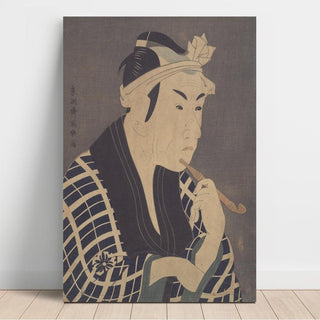


The Captivating Works of Toshusai Sharaku
Toshusai Sharaku is an enigmatic figure in Japanese art, renowned for his portraits of kabuki actors. His works, though produced over a short period, have become iconic of the ukiyo-e movement. Among his most famous creations are the Painting Ichikawa Ebizo no Takemura Sadanoshin and the Painting Nidaime Sawamura Yodogoro. These art prints allow appreciation of the dramatic intensity and unique expression captured by Sharaku.
Biographical FAQ
Who was Toshusai Sharaku?
Toshusai Sharaku is a Japanese artist whose true identity remains a mystery. Active during a very brief period from 1794 to 1795, he is mainly known for his prints depicting kabuki actors. Although little information is available about his life, his works have had a lasting impact on Japanese art and continue to be studied and admired for their distinctive style and ability to capture the essence of the characters he portrayed.
What style characterizes Sharaku’s works?
Toshusai Sharaku’s works are primarily associated with the ukiyo-e style, an artistic genre that flourished in Japan from the 17th to the 19th century. This style is characterized by woodblock prints depicting subjects such as kabuki actors, courtesans, and landscapes. Sharaku stands out for his realistic and often satirical approach to actor portraits, emphasizing expressive features and dramatic poses to capture the intensity of kabuki theater.
What influences shaped Toshusai Sharaku?
Sharaku was influenced by the world of kabuki theater, which was extremely popular at the time. His work reflects a deep understanding of theatrical performances and the personalities of the actors. Although there is no precise documentation of his personal influences, it is likely he was inspired by other ukiyo-e artists of his era, such as Katsushika Hokusai and Kitagawa Utamaro, who also explored similar themes in their works.
What are Sharaku’s major works?
Among Toshusai Sharaku’s major works are the Painting The Actor Matsumoto Koshiro IV in the Role of the Fishmonger Gorobei and the Painting Segawa Tomisaburo (as Yadorigi, wife of Ogishi Kurando). These works are particularly remarkable for their ability to capture the emotion and dramatic tension of the characters, while using woodblock engraving techniques to create dynamic and expressive images.
What technique did Sharaku use in his works?
Sharaku used the woodblock print technique, a popular method in Japan during the Edo period. This technique involved carving designs into wooden blocks, which were then inked and pressed onto paper to create multiple prints. Sharaku was especially skilled in using this technique to capture subtle details of facial expressions and costumes, making his kabuki actor portraits particularly vivid and memorable.
What is Toshusai Sharaku’s legacy?
Although Sharaku was active for a very short time, his impact on Japanese art is undeniable. His works influenced many later artists and continue to be studied for their stylistic innovation and unique representation of kabuki culture. Today, his prints are considered masterpieces of the ukiyo-e genre and are exhibited in museums worldwide, attesting to their enduring importance in art history.
Are there any interesting anecdotes about Sharaku?
A fascinating anecdote about Sharaku is the mystery surrounding his sudden disappearance from the art world. After producing about 140 prints in less than a year, he abruptly stopped working, and his true identity remains unknown to this day. This has led to many speculations and theories among art historians, adding a layer of mystery and intrigue to his artistic legacy. This sudden disappearance has contributed to the ongoing fascination with his work.
Toshusai Sharaku’s Artistic Journey
Artistic training
There is little information about Toshusai Sharaku’s artistic training. It is possible he was trained by a master of ukiyo-e printmaking, but no documents confirm this hypothesis. This lack of details about his early artistic career adds to the mystery surrounding him, but it is clear that Sharaku possessed exceptional mastery of the woodblock print technique, as evidenced by his complex and expressive works.
Key production period
Sharaku’s key production period spans from 1794 to 1795, an astonishingly short time during which he created about 140 prints. This period coincides with the growing popularity of kabuki theater in Japan, which likely influenced his choice of subjects. Despite the brevity of his career, Sharaku managed to produce a prolific body of work that marked the history of Japanese art.
Stylistic evolution
Sharaku quickly developed a distinctive style characterized by kabuki actor portraits with exaggerated expressions and accentuated features. This approach contrasted with the more idealized representations of his contemporaries, offering a more realistic and sometimes satirical view of the characters. His style evolved to include more complex compositions and intricate details, demonstrating a deep understanding of the psychology of the characters he portrayed.
Artistic legacy
Sharaku’s artistic legacy is immense despite the shortness of his career. His works influenced not only his contemporaries but also generations of Japanese and Western artists. His unique approach to kabuki actor portraits opened new paths in print art, and his works continue to be studied and admired for their innovation and expressiveness. Today, Sharaku is regarded as one of the masters of ukiyo-e.
Why buy an art print of Sharaku?
Decorative quality
Art prints of Toshusai Sharaku’s works offer exceptional decorative quality. The meticulous details and vibrant colors of the woodblock prints capture the essence of kabuki theater, bringing a touch of elegance and history to any space. These art prints are ideal for those who wish to add a cultural and artistic dimension to their interior decoration while appreciating traditional Japanese art.
Timelessness
Sharaku’s works possess a timelessness that transcends eras. Their ability to capture human emotions and the dramatic expressions of kabuki actors gives them ongoing relevance. By choosing an art print of Sharaku, you invest in a piece of art that will remain captivating and meaningful regardless of changing decorative trends.
Versatility of spaces
Sharaku’s art prints are versatile and blend harmoniously into various environments, whether modern homes, elegant offices, or art galleries. Their unique aesthetic and ability to evoke rich cultural narratives make them valuable additions to any space. These works can be used to create striking focal points or to complement existing art collections.
Selection of Must-See Works
Painting Sawamura Sojuro and Segawa Kikunojo
This work captures the dramatic intensity of two kabuki actors, Sawamura Sojuro and Segawa Kikunojo. The facial expressions and postures are finely detailed, illustrating Sharaku’s mastery in depicting human emotions.
Painting The Third Bando Hikosaburo in the Role of Chomemon, and the Fourth Iwai Hanshiro in the Role of Shinanoya Ohan
This print features two famous actors in iconic roles. Sharaku uses bold contrasts and precise details to capture the dynamic between the characters, creating a captivating and memorable scene.
Painting Sawamura Sōjūrō III in the Role of Ōgishi Kurando
In this work, Sharaku portrays Sawamura Sōjūrō III with remarkable intensity. The facial features and costume details are rendered with precision that testifies to the artist’s technical skill.
Painting Third Sanogawa Ichimatsu (from Gionmachi no Hakujin Onayo to), Ichikawa Tomiemon (from Kanisaka Tōma)
This print presents a dynamic theatrical scene, highlighting the talents of actors Sanogawa Ichimatsu and Ichikawa Tomiemon. Sharaku captures the energy of the performance with meticulous attention to detail.
Conclusion
Art prints of Toshusai Sharaku’s works offer a unique opportunity to own a piece of Japanese artistic history. Their ability to capture the essence of kabuki theater and transcend time makes them valuable additions to any art collection. Explore our selection and let yourself be captivated by the expressiveness and depth of Sharaku’s works. Don’t wait to enrich your space with these iconic pieces.